What we do · Report review
Reading your three reports
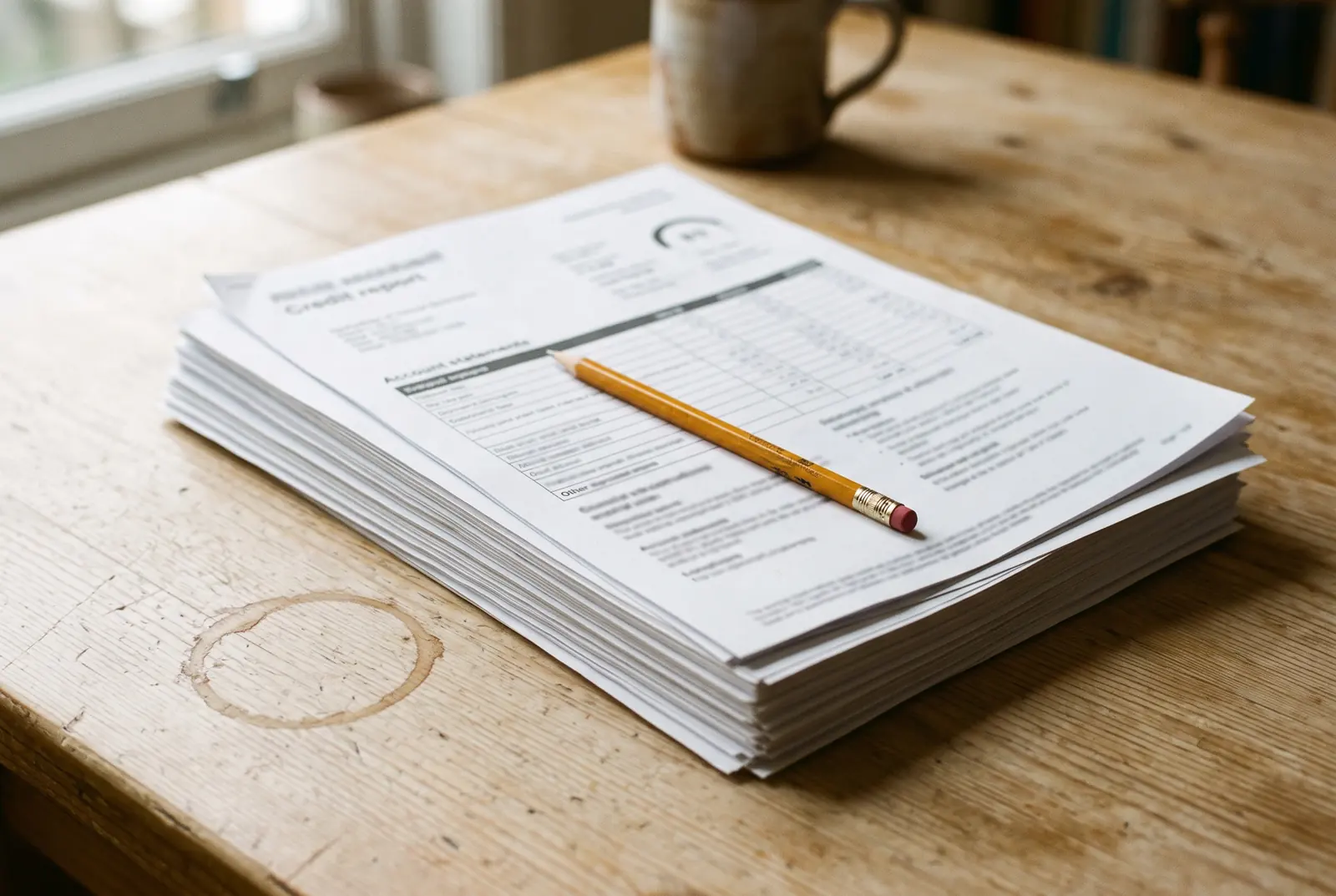
Almost nobody has read their own credit report properly. That is not a failing; the documents are long, repetitive, and written for the industry rather than for you. The first thing we do is fix that, because every other decision depends on knowing what is actually there.
- What it costs
- $180
- When you are invoiced
- Invoiced after the session, once the written plan is in your hands.
- How long
- Usually one 90-minute session
Three reports, not one
Equifax, Experian and TransUnion are separate companies with separate databases. A furnisher may report to one, two or all three, and it may report different things to each. A collection can appear on TransUnion alone. A paid balance can be corrected at Experian and left wrong at Equifax for another two years.
This is also why a single free score from a banking app tells you almost nothing about the problem. It is one model, on one bureau’s data, on one day. We work from the reports themselves.
- All three pulled at the same time, so they are genuinely comparable.
- Every tradeline identified: who the creditor is now, who it was originally, and whether the two entries are the same debt counted twice.
- Every date checked, especially the date of first delinquency, which controls when the item falls off.
- Personal information checked, because a wrong former address is frequently the first sign of a mixed file.
What we are actually looking for
The interesting errors are rarely dramatic. They are a status that says "charged off" on an account that was settled, a balance that never came down after payment, a collection that was sold and now shows twice under two agency names, or a first delinquency date quietly moved forward so the seven-year clock restarts.
We also look at the shape of the file rather than only its contents: how much of your available credit is in use, how many accounts are open, how old the oldest one is, and whether closing a card would help or quietly hurt.
Pulling your own reports is a soft inquiry. It is not visible to lenders and it has no effect whatsoever on your score, no matter how many times you do it. The idea that checking your own credit lowers it is the single most persistent myth in this field.
What you leave with
A written summary in plain language: a line for each entry, what it is, whether it looks disputable and why, and the month it is due to fall off. A short list of what would move the file most, in order. And a copy of all three reports, which are yours.
Plenty of people take that document and do the rest themselves. That is a good outcome and we will not chase you about it.
Nobody here is going to tell you off.
The first conversation is free, it takes about half an hour, and it ends with you knowing what is actually on your file and what can honestly be done about it. If the answer is "nothing we can charge for", we will tell you that, and you will still get the plan.
Not ready to talk to anyone? Take the guide and do it yourself. It is the same method, it costs nothing, and you never have to tell us you used it.